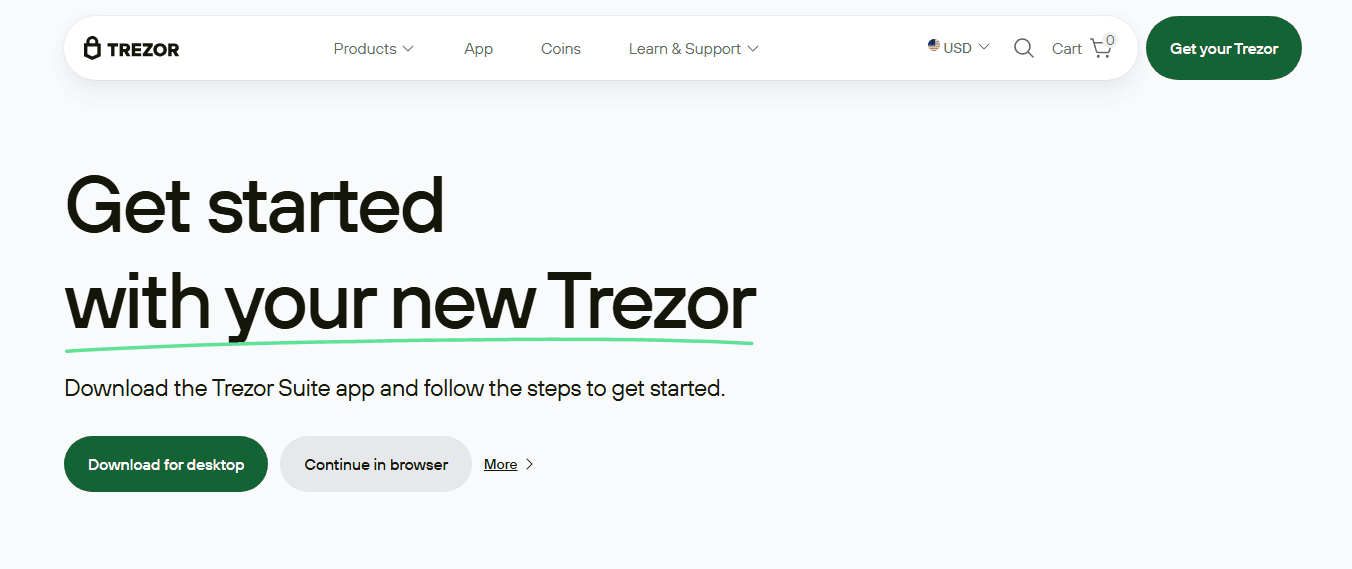
Complete Guide to Trezor.io/start: Setting Up Your Trezor Wallet
Introduction: What is Trezor.io/start?
In today’s cryptocurrency landscape, protecting your assets is a top priority. Cryptocurrencies are inherently digital, which means they are vulnerable to hacking, phishing, and other security threats if not stored properly. Trezor, a leader in cryptocurrency hardware wallets, offers a robust solution to keep your crypto safe by storing your private keys offline, where they are not exposed to potential online threats.
Trezor.io/start is the official setup page for Trezor hardware wallets, such as the Trezor One and Trezor Model T. This guide will walk you through the entire process of setting up your Trezor wallet, from unboxing the device to configuring it securely, allowing you to manage your digital assets with confidence. Whether you’re new to cryptocurrency or an experienced user, Trezor.io/start makes it easy to start storing your crypto securely.
Why Choose Trezor for Storing Your Crypto?
1. Exceptional Security
The primary reason for choosing a Trezor hardware wallet is security. Trezor devices store your private keys offline, meaning they are never exposed to the internet and thus impervious to online threats such as malware, phishing, or hacking. This makes Trezor one of the safest ways to store your cryptocurrency, as your keys never leave the device and are never vulnerable to external access.
2. Support for a Wide Range of Cryptocurrencies
Trezor is compatible with over 1,000 cryptocurrencies. Whether you’re dealing with Bitcoin (BTC), Ethereum (ETH), Litecoin (LTC), or ERC-20 tokens, Trezor can securely store a wide variety of digital assets. This makes it an excellent option for users with diverse portfolios.
3. User-Friendly Interface
Despite its advanced security features, Trezor remains user-friendly. The Trezor Suite app, which is required to interact with your Trezor wallet, provides an intuitive and easy-to-navigate interface. The setup process is simple, and managing your cryptocurrencies becomes an easy and streamlined task, whether you’re sending funds or tracking your portfolio.
4. Integrated Staking and DeFi Access
In addition to securely storing your cryptocurrencies, Trezor allows you to engage with decentralized finance (DeFi) platforms. You can stake certain cryptocurrencies, like Tezos (XTZ) and Cosmos (ATOM), to earn rewards for participating in their networks. This adds a layer of functionality, making Trezor more than just a storage solution.
5. Transparency and Open-Source
Trezor is an open-source project, which means that anyone can verify the code for security vulnerabilities. This level of transparency ensures that Trezor has nothing to hide, and its users can trust that the device is as secure as advertised.
Step-by-Step Guide to Setting Up Your Trezor Wallet via Trezor.io/start
Trezor.io/start is the official web page that takes you through the initial setup of your Trezor hardware wallet. Below, we’ll walk you through each step in detail, so you can get your wallet up and running quickly and securely.
Step 1: Unbox Your Trezor Device
When you receive your Trezor wallet, you’ll find the following contents in the box:
The Trezor One or Trezor Model T device.
A USB cable (for connecting to your computer or mobile device).
Recovery seed cards (to securely write down your 24-word recovery seed).
A user manual and Trezor stickers.
Before you proceed, ensure that your Trezor device is sealed and has not been tampered with. Trezor takes security seriously, and an intact seal ensures that the device you’ve received is legitimate.
Step 2: Visit Trezor.io/start
Open Your Browser: Go to Trezor.io/start. This is the official page where you’ll begin the process of setting up your Trezor wallet.
Select Your Device: The first step on the website will ask you to select your model—either the Trezor One or Trezor Model T. After selecting your model, the site will provide instructions specifically for your device.
Download Trezor Suite: You will be asked to download Trezor Suite, which is the software used to manage your Trezor wallet. Trezor Suite is available for Windows, macOS, and Linux. Make sure to download it directly from the official website to avoid any malicious versions.
Step 3: Install Trezor Suite
Download the Software: After selecting the appropriate operating system, download Trezor Suite from the official website.
Install Trezor Suite: Open the installation file and follow the on-screen instructions to install the app on your computer.
Launch the App: After installation is complete, open Trezor Suite. This is the companion app you’ll use to manage your Trezor wallet.
Step 4: Connect Your Trezor Device
Plug in Your Device: Using the USB cable provided, connect your Trezor device to your computer. If you have a Trezor Model T, you can also connect it via Bluetooth for use with mobile devices.
Verify Device Authenticity: After connecting the device, Trezor Suite will prompt you to verify that your device is authentic. This ensures that you’re using a genuine Trezor and not a counterfeit product. Check the serial number displayed on the device to confirm its authenticity.
Select Your Language: Choose your preferred language for both the Trezor Suite interface and the device’s display.
Step 5: Create Your PIN and Write Down Your Recovery Seed
Create a PIN Code: For added security, you’ll be prompted to create a PIN. This PIN will be required every time you access your wallet on your Trezor device. Choose a strong PIN that’s unique and hard to guess.
Write Down Your Recovery Seed: The next step is to generate your 24-word recovery seed. This recovery seed is the most important part of your wallet setup because it is the only way to recover your funds if your device is lost, stolen, or damaged. Write down the seed carefully on the provided recovery card, and keep it in a secure location. Never store your recovery seed online or in any digital form.
Confirm Your Recovery Seed: To ensure that you’ve written down the seed correctly, your Trezor device will ask you to confirm the seed by selecting the words in the correct order. This step is essential to ensure you can recover your funds if necessary.
Step 6: Install Cryptocurrency Apps
Install the Apps: After confirming your recovery seed, you’ll need to install apps for the cryptocurrencies you wish to store. For example, if you want to store Bitcoin (BTC), you’ll need to install the Bitcoin app.
Manage Your Crypto: Once the apps are installed, you’ll be able to view your cryptocurrency balances, send and receive funds, and more directly within Trezor Suite.
Step 7: Start Using Your Trezor Wallet
Now that your Trezor wallet is fully set up, you can start using it to manage your cryptocurrency holdings:
Check your balances: See how much cryptocurrency you hold across all supported coins.
Send and receive transactions: Use Trezor Suite to send and receive crypto. All transactions require confirmation on the Trezor device itself, ensuring that only you can authorize them.
Buy and swap crypto: Through integrations with services like CoinSwitch and Changelly, you can buy or swap cryptocurrencies directly from within Trezor Suite.
Engage in staking: If you’re interested in earning rewards, you can stake supported coins like Tezos (XTZ) and Cosmos (ATOM) using your Trezor device.
Best Practices for Securing Your Trezor Wallet
While Trezor hardware wallets are secure by design, there are a few best practices that you should follow to keep your wallet and funds safe.
1. Store Your Recovery Seed Safely
The recovery seed is your backup in case you lose access to your Trezor device. Store it offline in a secure place, such as a safe or a vault. Do not store the seed digitally (e.g., in emails or cloud storage), as this could expose it to hackers.
2. Enable Passphrase Protection
For an added layer of security, you can enable a passphrase. This passphrase creates an additional "hidden" wallet on your Trezor device, which requires both the recovery seed and the passphrase to access. Even if someone has your recovery seed, they